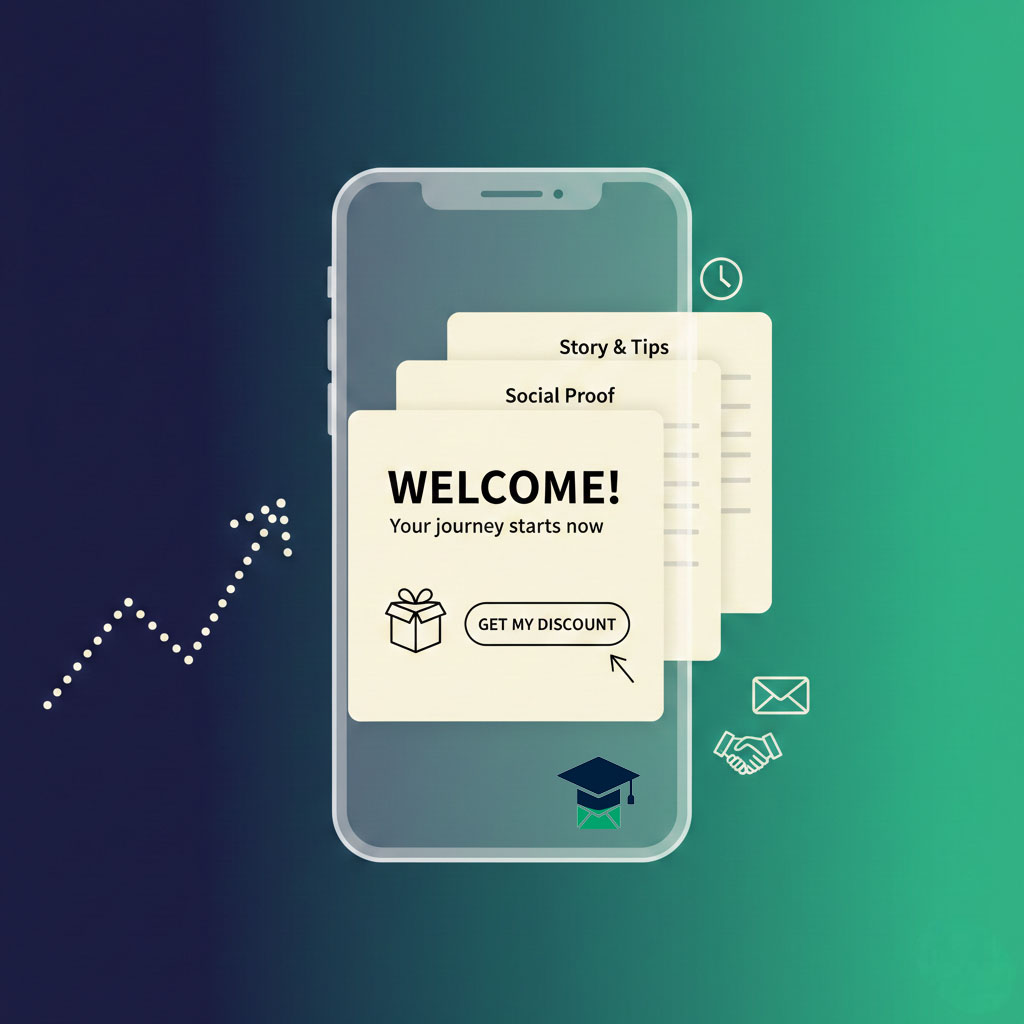
Welcome Email Series Best Practices For 2026
Hands up who loves a good welcome email series? I know I do, but then I tend to look at everything through my emailgeek lens.
A good welcome series can turn one-time buyers into repeat purchasers, and they are relatively simple to set up, but I’m always amazed at the number of brands that don’t bother with them at all.
What is a Welcome Email?
A welcome email is automatically sent to a subscriber the moment they subscribe to your email list or make their first purchase. It’s often seen as a critical touchpoint because engagement is at its peak.
Your customer or subscriber is often expecting to receive a welcome email, so don’t miss the chance to engage with them.
Why a Welcome Series Matters
High Engagement: Welcome emails have an average open rate of roughly 50% – some sources cite up to 86% higher open rates than standard newsletters.
Revenue Generation: The average welcome series generates significantly more revenue per recipient than other emails, with top performers achieving a placed order rate of nearly 10%.
Long-term Impact: Subscribers who read a welcome message are likely to read 40% of subsequent messages from that brand over the next 180 days.
What Makes a Good Welcome Email
A good welcome email sets the tone for the relationship, establishes credibility, and drives immediate action.
Immediacy: The best welcome emails are sent in “real-time,” moments after the signup.
Clear Expectations: It should clarify what content the subscriber will receive (deals, news, advice) and how often.
Human Tone: Effective copy feels personal and conversational, often written like a letter from a friend or founder rather than a robot.
Singular Focus: While a series allows you to cover multiple topics, individual emails should not be overcrowded. They should guide the user toward a specific desired action, e.g. the next purchase.
What to Feature in Your Series
A welcome series allows you to spread information across several messages rather than cramming it all into one.
There are no hard and fast rules for what you should feature. However, your first email is arguably the most important, so make sure this one really delivers.
Here are the ideas of things to feature to get you started:
The Warm Welcome & Fulfilment (Email 1)
Thank You: Acknowledge the sign-up and thank the subscriber.
Fulfil the Promise: If you offered a discount, ebook, or incentive for signing up, deliver it immediately.
Brand Introduction: Briefly introduce who you are.
Brand Story & Education (Emails 2-3)
Founder Introduction: Include a headshot and a note from the founder to build a personal connection.
Educational Content: Provide useful tips, how-to guides, or industry insights to position your brand as an authority.
Product Highlights: Showcase top products or “bestsellers” using high-quality photography.
Social Proof & Engagement (Emails 3-5)
Testimonials and Reviews: Share customer success stories to build trust.
Social Channels: Encourage subscribers to follow your social media accounts or join a community.
Data Collection: Use progressive profiling or a link to a preference centre to ask subscribers about their interests (e.g., birthday, product preferences) so you can segment future emails.
The Nudge (Final Emails)
Re-engagement/Urgency: If they haven’t purchased yet, remind them of their discount code or offer an incentive to take the next step.
When to Send Your Welcome Series
Timing is critical. A common recommendation for a welcome email series is 3 to 5 emails sent over a specific window. Here’s an example based on our experience running Welcome Series across several different industries.
Email 1 (The Trigger): Send immediately upon signup. New subscribers expect to hear from you within 48 hours, but instant delivery is best to capitalise on their excitement.
Email 2: Send 1–2 days after the first email. This keeps your brand top-of-mind without being annoying.
Subsequent Emails: Space these out by 2–3 days. Here’s an example schedule you could use.
- Day 0: Welcome + Offer.
- Day 2: Brand Story/Bestsellers.
- Day 5: Social Proof/Testimonials.
- Day 7-10: Reminder/Urgency.
Purchase Cycle Consideration: The length of your series should mirror your average purchase cycle. If it typically takes a customer 10 days to decide to buy, your series should cover that 10-day window.
Pro Tips for Success
Testing: Like all things in email, don’t forget to test. Find out what works for your brand, from content to subject lines to CTA to the timing of emails.
Subject Lines: Keep them clear, brief (around 7 words), and consider using the subscriber’s name or a teaser. Avoid generic lines like “Welcome to the list” in favour of benefit-driven lines like “You’re in! Here’s your discount”.
Mobile Optimisation: Ensure your design is “thumb-friendly” with legible fonts and easily clickable buttons, as many users open emails on mobile devices.
Segmentation: Remove people currently in the welcome series from your regular campaigns. Suppress them until they finish the welcome flow to avoid overwhelming them.