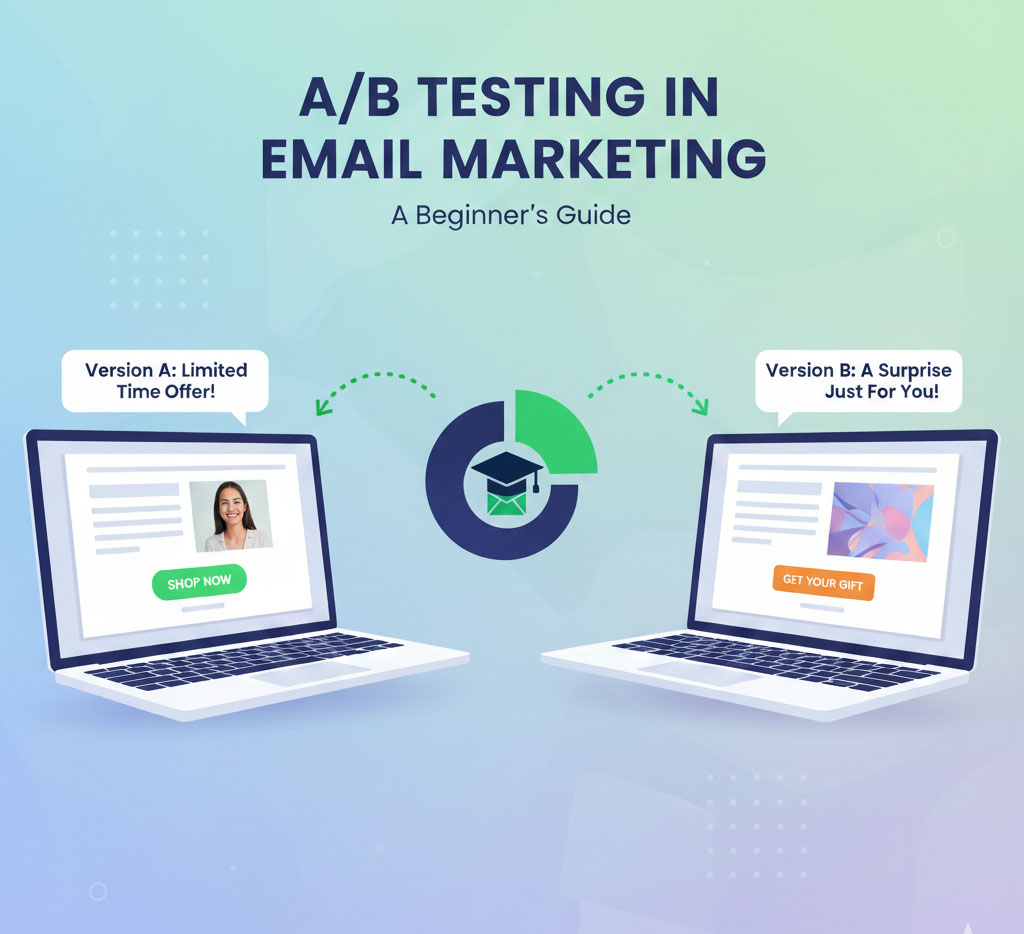
A/B Testing In Email Marketing: A Comprehensive Beginner’s Guide
One of the most powerful tools in the email marketer’s toolbox is A/B testing. But email marketers often conduct A/B testing incorrectly, without proper thought, leading to frustration and a lack of meaningful results.
In this guide, we’re going to talk you through the basics of A/B testing, what it is and the types of things you should and could be testing. Grab a brew and let’s get into it.
What is A/B testing in Email Marketing
A/B testing, or split testing as it’s sometimes called, is simply the process of taking one element of your campaign, for example, your subject line and testing two or more variations of that element to see which one performs better with your audience.
Plan Before You Start Testing
Before you jump straight in and start testing, make a plan. Ask yourself the following questions
- What element am I going to test?
- What is the expected outcome?
- How will I test it?
- How will I measure the result?
Once you know the answer to these questions, you can begin to work on the element you plan to test. For example, if you have decided you are going to test your subject line, you can work with your copy or creative team to explain what you need from them, in this case, two different subject lines.
Examples of A/B Testing
There are many different elements we can test in our campaigns. We’re going to give you some examples to get you thinking. Let’s start with the basics.
Email Subject Line Testing: Getting Your Email Opened
The subject line is the most critical element of your campaign because it determines whether your email even gets a chance to be read. If you don’t grab your subscribers here, the rest of your hard work goes to waste.
When testing subject lines, don’t just settle for minor tweaks. Try a “step-change” approach to see what truly resonates. For example, test a benefit-driven subject line (e.g., “Save 20% on your next order”) against a curiosity-gap version (e.g., “We have a surprise waiting for you…”). You can also experiment with:
- Personalisation: Does including the recipient’s first name increase opens, or has your audience become immune to it?
- Urgency: Test a deadline-driven approach (“Only 24 hours left!”) against a more relaxed, informational tone.
- Length: Compare short, snappy subject lines (under 30 characters) against longer, more descriptive ones to see what fits your readers’ mobile screens best.
Test Your Call to Action (CTA) to Drive Clicks
If the subject line is the key that opens the door, your Call to Action (CTA) is the person inviting the guest inside. A well-placed, clearly worded CTA determines whether a reader engages with your brand or simply hits the ‘delete’ button.
When testing your CTAs, start with the visual elements. Does a bright green button outperform a classic blue one? Sometimes, a simple text link feels more personal and less “salesy” than a bold button. You should also experiment with the copy itself. Instead of the standard “Click Here” or “Buy Now”, try first-person phrasing like “Get my free guide” or “Start my trial”. This subtle shift makes the action feel like a benefit the reader is receiving rather than a task they are performing.
Refine Your Results with Template Design Testing
Your email layout dictates how a user consumes your information. Beginners often make the mistake of overcomplicating their designs. Use A/B testing to find the “sweet spot” for your audience.
Try testing a single-column layout against a multi-column version. Single-column designs often perform better on mobile devices because they lead the eye naturally down the page toward the CTA. You can also test the “density” of your content. Send one version with a large, striking hero image and minimal text, and another version that prioritises helpful, editorial-style copy. By monitoring which version leads to more engagement, you learn whether your audience prefers quick visual hits or deep-dive information.
The Golden Rules of Successful A/B Split Testing
To gain meaningful insights, you must follow a scientific approach. If you change five things at once, you will never know which one actually worked. Follow these three rules to keep your data clean:
- Isolate One Variable: Only test one change at a time. If you change the subject line and the button colour, you cannot attribute an uplift in sales to either one.
- Ensure Statistical Significance: Don’t stop a test after ten minutes. Ensure you send your variations to a large enough sample of your list so that the results represent true audience behaviour.
- Control the Timing: Send both versions at the exact same time and day. This eliminates external factors—like a Monday morning rush or a Friday afternoon slump—from skewing your results.
Measure Success Beyond the Open Rate
While open rates tell you if your subject line worked, they don’t tell the whole story. As you grow as a marketer, focus on the Click-Through Rate (CTR) and Conversion Rate. These metrics prove that your content resonated and drove actual business value.
Keep a dedicated log of every test you run. Over months of campaigning, these “small” wins compound. You aren’t just sending better emails; you are building a profile of your customer’s psychology. Use these insights to refine your strategy, and you will soon find that “best practice” isn’t a guess – it’s something you have proven yourself.